Cookie Preferences

When you visit websites, they may store or retrieve data in your browser. This storage is often necessary for the basic functionality of the website.

Accept All Cookies
Close
Cookies on this website

By clicking “Accept”, you agree to the storing of cookies on your device to enhance site navigation, analyze site usage, and assist in our marketing efforts. View our Privacy Policy for more information.

Lumos Alternatives

The Best
Lumos Alternatives & Competitors for 2026

BalkanID Logo Icon
User Access ReviewsWhen and WhyTop ToolsScalabilityRecommendationsFAQs

Introduction:

  • Hook: While Lumos has made waves in SaaS Management, modern security teams often find themselves hitting a wall when it comes to deep risk visibility and predictable enterprise pricing.
  • The Narrative: Today’s IGA is no longer just about "Who has access?"—it’s about "What is the risk of that access?" This guide breaks down the top Lumos alternatives to help you find the right fit for your security posture and budget.

Comparison Table: Lumos vs. The Field (2026)

Feature
BalkanID
Lumos
Zluri
Saviynt
Okta IG
Primary Focus
Risk-First IGA
SaaS Mgmt + Access
App Discovery & SMP
Enterprise GRC
IAM Extension
Pricing Model
Public & Transparent
Quote-Based
Quote-Based
High Enterprise TCO
Per-User Add-on
Risk Analytics
Advanced (AI-Driven)
Basic
Moderate
Deep/Complex
Minimal
Self-Service
Yes (Lite & Ent)
Yes (Web App Store)
Yes
Yes
Yes
Implementation
Days/Weeks
Weeks
Weeks
Months
Days (if on Okta)
Best For
Security Maturity
IT Productivity
Shadow IT
Regulated Giants
Okta Shops

1. BalkanID:

True Identity Governance, Built for Risk-First Security Teams
Overview

BalkanID is positioned as the first Intelligent Identity Governance platform built to answer the question traditional IGA tools avoid:

“Which identities and entitlements actually put my organization at risk—and what should I do about them?”

Unlike SaaS management tools or legacy IGA platforms that focus on managing lists of applications and permissions, BalkanID is identity-centric and risk-driven. It continuously discovers identities, entitlements, and relationships across SaaS, cloud, and on-prem environments, then applies intelligence to prioritize, explain, and remediate risk.

BalkanID can operate as a standalone IGA or sit on top of existing IAM/IGA infrastructure (Okta, Entra, SailPoint), delivering faster insight and action without requiring a rip-and-replace.

What Makes BalkanID Different

1. Identity Governance Built Around Risk—not Inventory

Most “IGA” tools answer who has access to what.
BalkanID also answers who shouldn’t—and why.

  • Identifies over-entitled users, outliers, and toxic combinations
  • Surfaces contextual explanations (peer access, role anomalies, privilege indicators)
  • Prioritizes risk so teams focus on what matters first

This makes BalkanID especially effective for security, risk, and compliance teams that need to reduce attack surface—not just manage access lists.

2. Risk-Based Access Reviews That Reviewers Can Actually Complete

Traditional access reviews fail because reviewers lack context. BalkanID fixes this.

  • Reviewers see why access is risky, not just that it exists
  • Peer comparisons, role context, and risk signals are embedded directly into reviews
  • Reviews move from checkbox exercises to meaningful governance actions

Result: Faster certifications, higher reviewer confidence, and defensible audit outcomes.

3. Intelligent Lifecycle Governance with Purpose-Based Access

BalkanID governs identity across the full lifecycle—Joiner, Mover, Leaver—with a modern, policy-driven model.

  • Role mining recommends the right access at onboarding
  • Just-in-Time, Purpose-Based Access ensures users only get access when required
  • Automatic deprovisioning eliminates access creep as users change roles or leave

This goes beyond basic provisioning by enforcing least privilege continuously, not just at hire or termination.

4. Role Mining & RBAC That Stays Current

RBAC often fails because it becomes outdated. BalkanID keeps it alive.

  • Automatically generates RBAC posture using HR data + entitlement patterns
  • Identifies sparse roles, redundant roles, and access sprawl
  • Performs impact analysis before role changes to prevent business disruption

RBAC becomes a living governance model, not a one-time project.

5. IAM Risk Analyzer & Governance Playbooks

BalkanID brings a SOAR-like approach to identity governance.

  • Continuously detects excessive access, SoD violations, and risky identities
  • Explains risk in plain language, not raw data dumps
  • Triggers governance playbooks (review, revoke, notify, suspend) via APIs and integrations

This allows teams to move from reactive audits to proactive identity risk management.

6. AI Copilot: Identity Governance at the Speed of Questions

BalkanID Copilot makes governance accessible without dashboards or tickets.

  • Ask questions like:
    • “Who has admin access to production systems?”
    • “Which users violate SoD policies?”
  • Generate playbooks and remediation actions using natural language
  • Operate via Web UI, Slack, Teams, or headless APIs

This lowers the barrier to governance while increasing adoption across security, IT, and GRC teams.

Strengths

  • True Identity Governance: Focused on identities, entitlements, and risk—not just apps
  • Risk-First Architecture: Prioritizes what’s dangerous, not what’s noisy
  • Public, Transparent Pricing: The only IGA vendor offering self-service pricing
  • Modern UX: Designed for reviewers, not just administrators
  • Flexible Deployment: Standalone IGA or layered on top of existing tools
  • API-First & Agentic: Supports automation, headless workflows, and playbooks

Weakness

  • Newer to market: Less brand recognition than legacy giants like SailPoint or Saviynt
  • Connector breadth: Smaller out-of-the-box library than SailPoint today—though expanding rapidly and supplemented by APIs and heuristics

These tradeoffs are intentional: BalkanID prioritizes depth of governance and speed to value over bloated connector catalogs.

Ideal Customer

BalkanID is ideal for organizations that:

  • Are security- and risk-conscious, from SMB to enterprise
  • Want audit-ready governance without enterprise complexity
  • Care more about reducing identity risk than managing SaaS inventory
  • Are frustrated with spreadsheet-driven access reviews
  • Want transparency in pricing and time-to-value

Pricing (Transparent by Design)

  • BalkanID Lite: Starts at $1,000/month (self-service, fast onboarding)
  • BalkanID Enterprise: Starts at $25K/year
  • Managed services

No hidden fees. No multi-year lock-ins. Governance you can actually budget for.
2. Lumos (The Baseline)

Overview

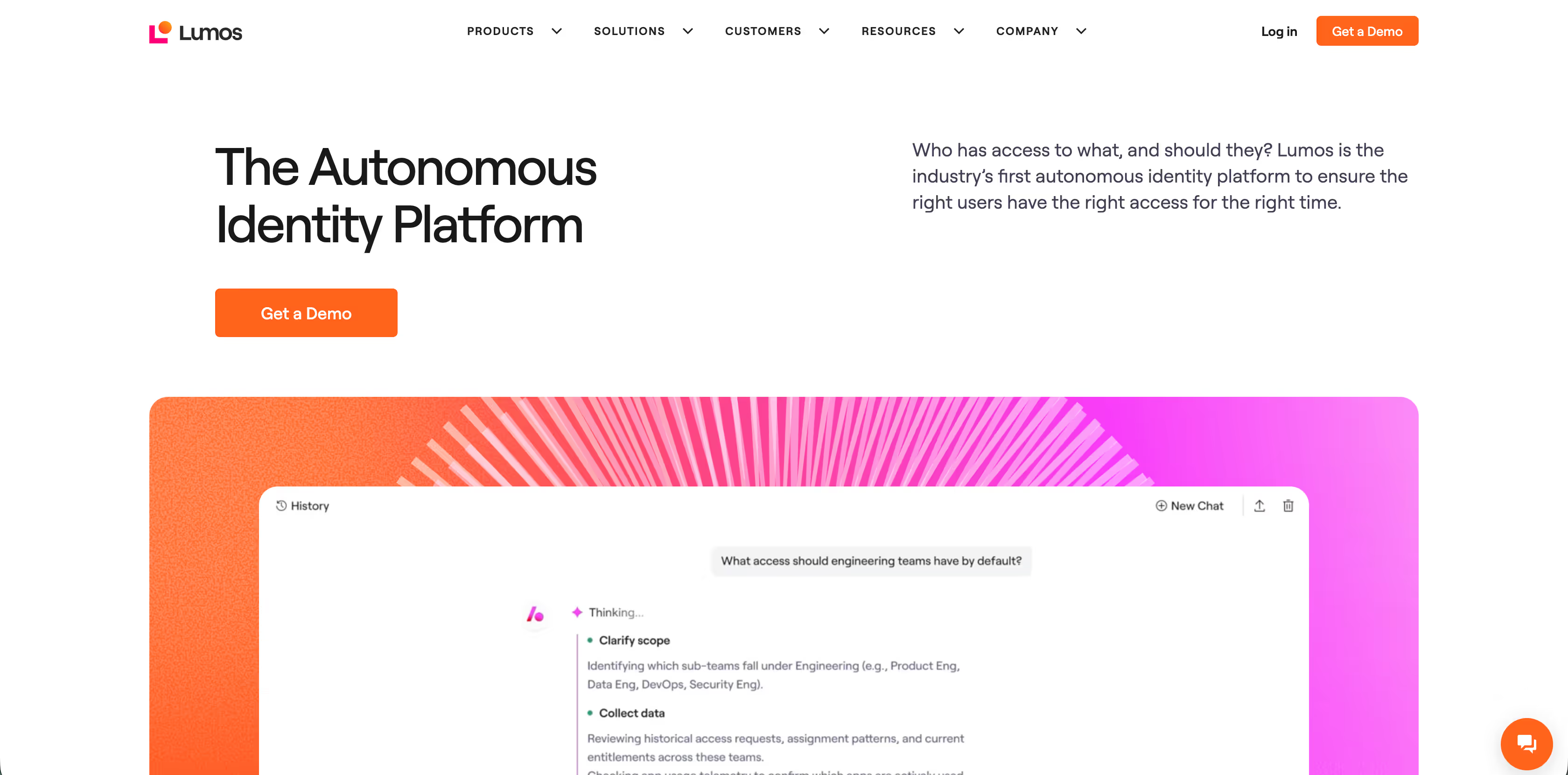
Lumos is a modern SaaS-focused identity and access management platform positioned around access visibility, employee access management, and SaaS governance. It sits at the intersection of SaaS management and lightweight identity governance, with a strong emphasis on usability and automation.
Where Lumos Excels

  • Excellent user experience: Clean, modern UI designed for fast adoption by IT and business users.
  • Strong SaaS access visibility: Clear mapping of users to applications and high-level access across SaaS tools.
  • Employee-centric workflows: Intuitive onboarding, offboarding, and access request experiences.
  • Automation-first approach: Good support for automated provisioning and deprovisioning in SaaS-heavy environments.
  • Fast deployment: Quicker to implement than traditional IGA platforms.

Where Lumos Falls Short

  • Limited depth in governance: Identity governance capabilities (UAR depth, SoD analysis, entitlement-level controls) are relatively lightweight.
  • SaaS-first bias: Less effective in hybrid or on-prem environments where fine-grained entitlements matter.
  • Minimal RBAC sophistication: Limited role mining, role optimization, or continuous RBAC posture management.
  • Weak proactive risk detection: Lacks advanced IAM risk analytics, playbooks, or contextual risk explanations.
  • Not audit-first: Compliance-heavy teams may find reporting and evidence collection insufficient for rigorous audits.

Ideal Customer

  • Modern, SaaS-first companies
  • IT teams focused on employee enablement and access hygiene
  • Organizations prioritizing usability and automation over deep governance controls

Pricing

  • Custom pricing
  • Cost increases with number of users and connected applications

3. Zluri

Overview

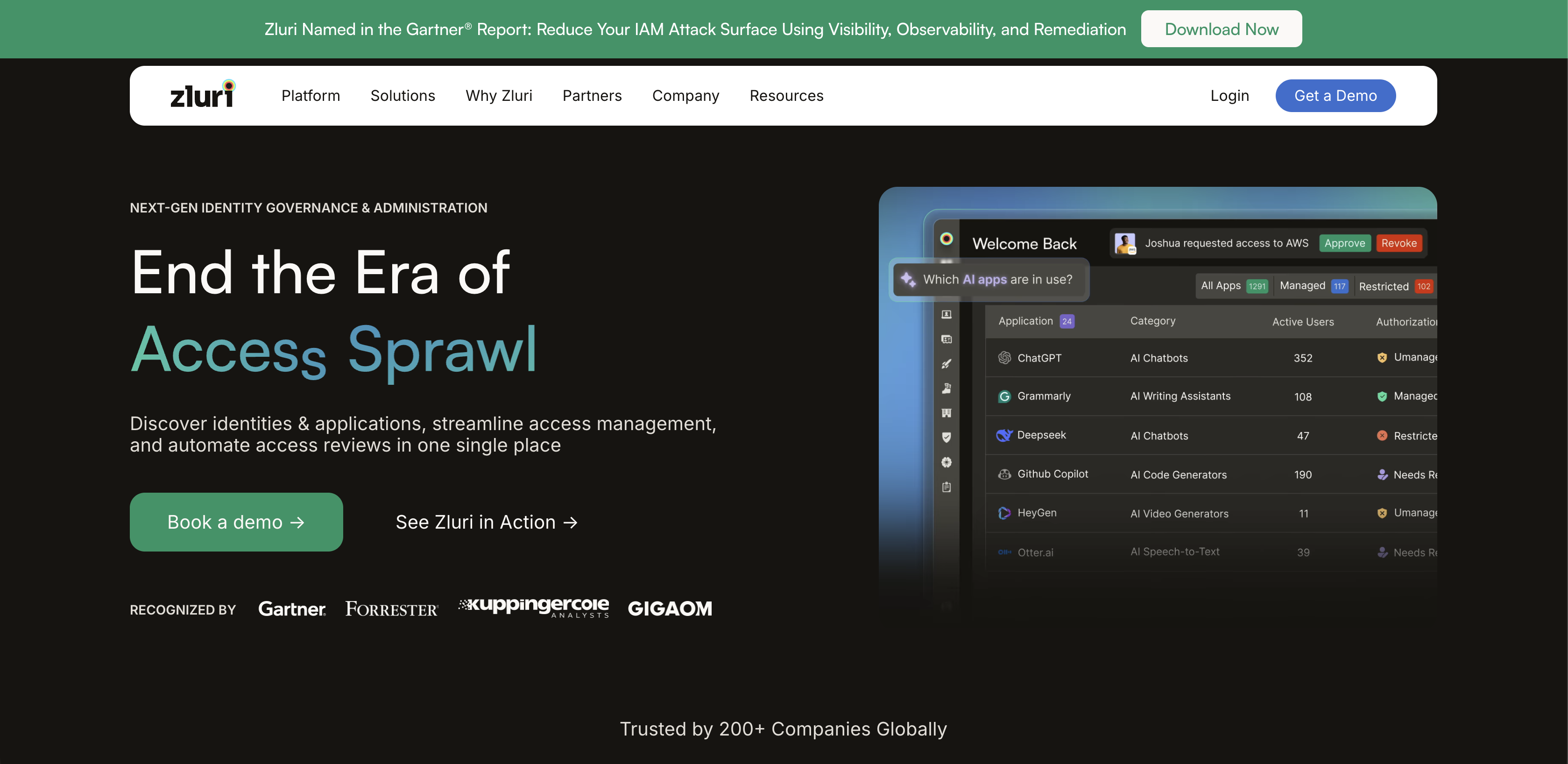
Zluri is a SaaS Management Platform (SMP) that has expanded into Identity Governance to address access sprawl in SaaS-heavy environments. Its core DNA remains SaaS discovery, spend optimization, and application management, with IGA layered on top.
Where Zluri Excels

  • Extensive SaaS coverage: 800+ prebuilt integrations make it easy to discover and manage a sprawling SaaS ecosystem.
  • Shadow IT discovery: Strong visibility into unmanaged or unsanctioned applications through expense and network signals.
  • Automated offboarding: “One-click” offboarding across SaaS apps is effective for fast-growing teams with high employee churn.
  • Good for SaaS-first orgs: Especially valuable where SaaS governance and spend control are the primary problems to solve.

Where Zluri Falls Short

  • IGA is not the core platform: Identity governance capabilities (access reviews, lifecycle governance, risk analysis) feel secondary to SaaS management.
  • Limited depth in access context: Focuses more on app-level access than fine-grained entitlements, roles, or identity risk posture.
  • Cluttered user experience: The UI reflects the breadth of features, which can overwhelm security and compliance teams focused on governance workflows.
  • Weaker governance primitives: Limited native support for advanced RBAC modeling, SoD analysis, or identity-centric risk analytics.

Ideal Customer

  • Fast-growing startups or mid-market companies
  • SaaS-first environments with limited on-prem footprint
  • Teams primarily concerned with SaaS sprawl and license waste, not deep identity governance

Pricing

  • Custom, enterprise-style pricing
  • Cost scales with number of apps and users, often increasing as SaaS footprint grows

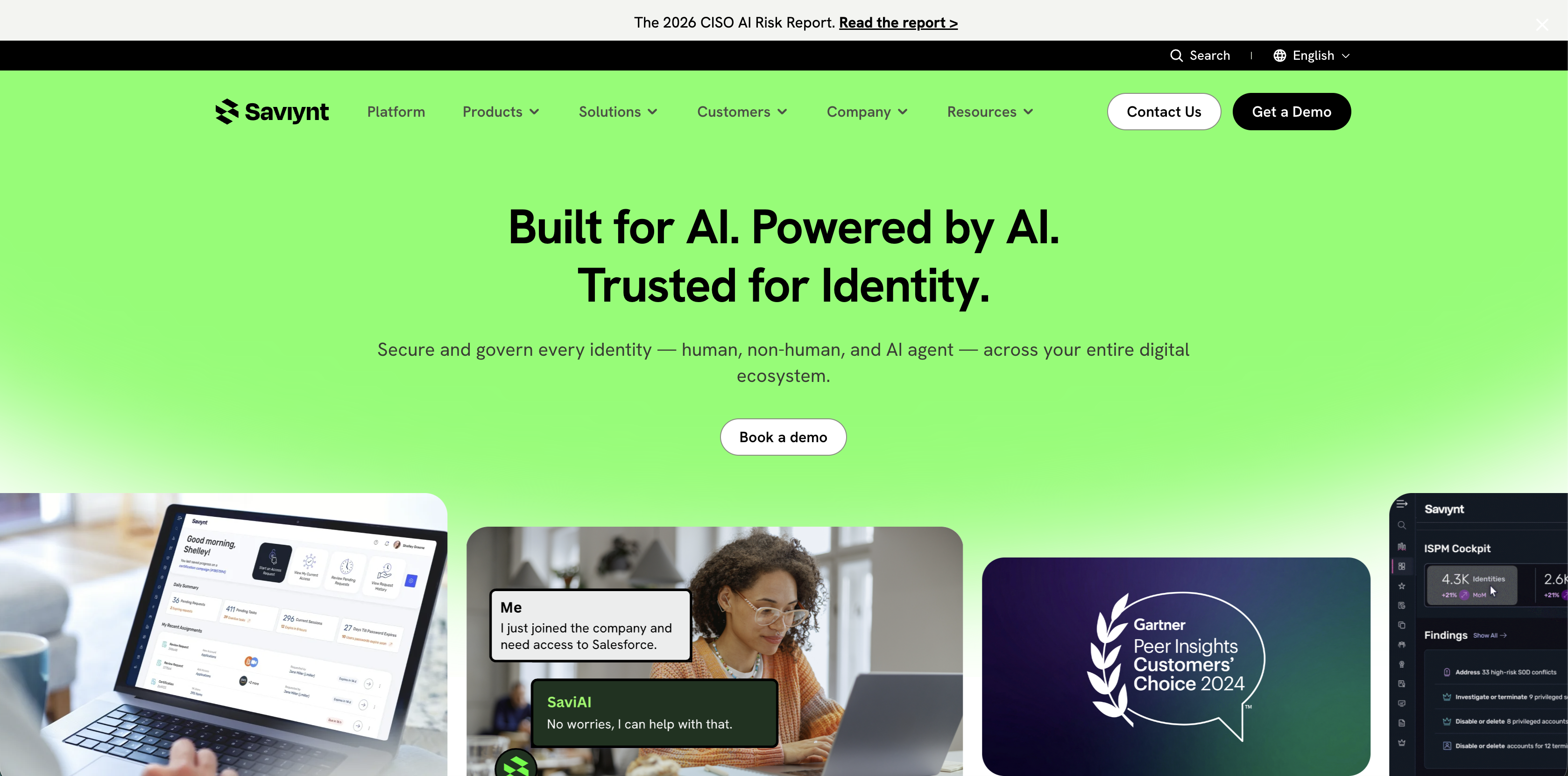
4. Saviynt

Overview

Saviynt is a cloud-native Identity Cloud platform designed for large, highly regulated enterprises. It combines IGA, PAM, and GRC capabilities into a single platform and is often deployed in complex hybrid environments.
Where Saviynt Excels

  • Deep Segregation of Duties (SoD): Strong policy engine for identifying and managing SoD conflicts, especially in ERP-heavy environments.
  • Broad platform scope: Covers IGA, PAM, and GRC use cases in a single vendor stack.
  • Regulatory alignment: Well-suited for industries like financial services, healthcare, and government with strict compliance mandates.
  • Complex environment support: Handles highly customized, on-prem + cloud identity architectures.

Where Saviynt Falls Short

  • Steep learning curve: The platform is powerful but complex, requiring specialized expertise to configure and operate.
  • High implementation cost: Initial deployments often require significant professional services, with hidden costs surfacing over time.
  • Slower time-to-value: Customers can wait months before realizing benefits, especially for access reviews or lifecycle automation.
  • Outdated user experience: Business reviewers and managers often struggle with the UI, reducing adoption and increasing review fatigue.

Ideal Customer

  • Large enterprises (often 10,000+ employees)
  • Highly regulated industries with strict SoD and audit requirements
  • Organizations with the budget and staffing to support long, complex IGA implementations

Pricing

  • High entry point, commonly $100K+ annual minimums
  • Additional costs for connectors, modules, and professional services

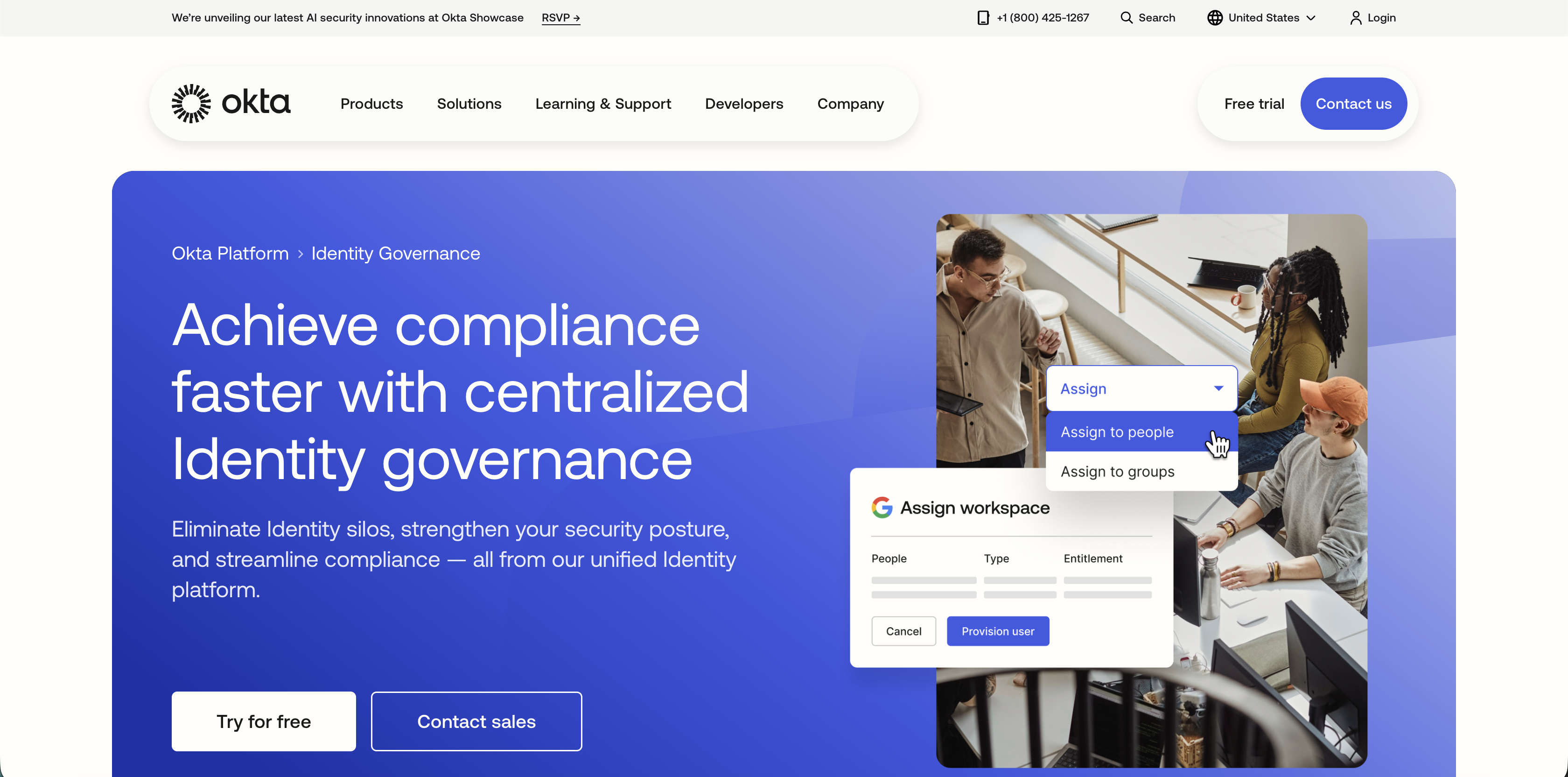
5. Okta Identity Governance (OIG)

Overview

Okta Identity Governance is an add-on governance layer within the Okta ecosystem, extending Okta’s core IAM platform with access certifications, lifecycle workflows, and basic governance controls. It is best suited for organizations already standardized on Okta as their primary identity provider.

Where Okta Identity Governance Excels

  • Native Okta integration: Seamless experience for customers fully invested in Okta Workforce Identity.
  • Familiar admin experience: Governance features fit naturally into existing Okta admin workflows.
  • Basic access reviews: Supports standard access certifications for Okta-managed applications.
  • Reliable lifecycle automation: Strong joiner–mover–leaver automation for Okta-connected apps.
  • Ecosystem leverage: Works well alongside Okta Workflows and other Okta products.

Where Okta Identity Governance Falls Short

  • Okta-centric view: Governance is largely limited to what flows through Okta; visibility drops significantly for non-federated apps and on-prem systems.
  • Limited entitlement granularity: Struggles with fine-grained entitlements, custom roles, or complex authorization models.
  • Basic risk intelligence: Minimal native IAM risk analysis, SoD detection, or contextual risk scoring.
  • Reviewer experience limitations: Business reviewers often lack rich context when making certification decisions.
  • Cost stacking: Governance features are add-ons, increasing total Okta spend as needs grow.

Ideal Customer

  • Organizations fully standardized on Okta
  • Cloud-first environments with minimal on-prem complexity
  • Teams needing basic governance, not deep identity risk management

Pricing

  • Add-on pricing on top of Okta Workforce Identity
  • Costs scale with users and enabled governance features

Ready to simplify your access reviews and
strengthen your security posture?

Book a Demo with BalkanID today and see how effortless compliance can be.