Beyond Provisioning: How Identity Is Evolving from JIT to SCIM to Purpose-Based Access?
Learn why traditional identity provisioning falls short and how identity lifecycle management must evolve to support purpose-based and time-bound access.
.svg)
Learn why traditional identity provisioning falls short and how identity lifecycle management must evolve to support purpose-based and time-bound access.
Trace the evolution of privileged access management, from static credential vaults to intent-driven, just-in-time access models.

Learn how identity lifecycle and privileged access are converging, and why aligning IGA and PAM is critical for reducing access risk in modern enterprises.
Learn how identity lifecycle and privileged access are converging, and why aligning IGA and PAM is critical for reducing access risk in modern enterprises.


Learn why traditional identity provisioning falls short and how identity lifecycle management must evolve to support purpose-based and time-bound access.
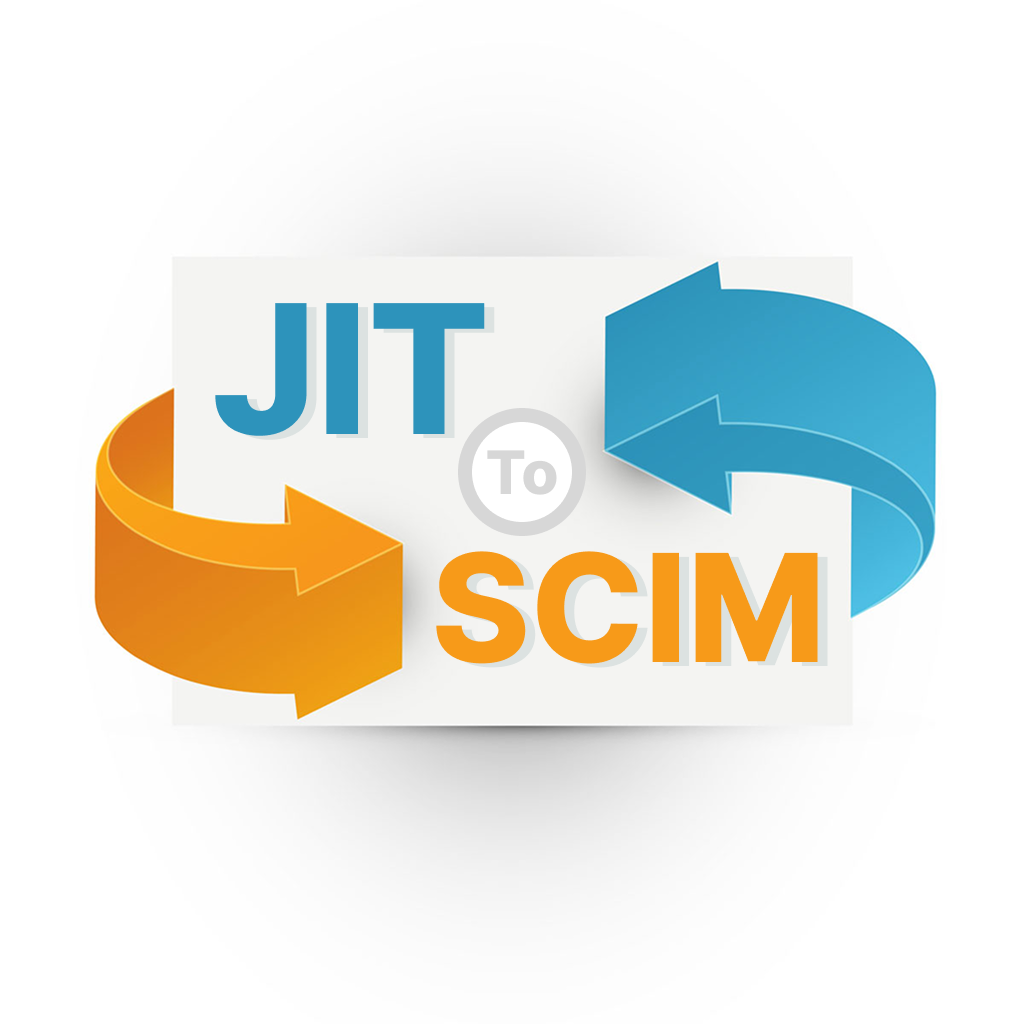
Enterprise identity didn’t begin as a security discipline. It began as a response to friction.
As organizations adopted SSO and cloud applications at scale, the first failure mode was obvious and painful: users authenticated successfully, but accounts didn’t exist in downstream systems. Access tickets exploded. Productivity stalled. IT teams were blamed for being “slow.”
Just-In-Time (JIT) provisioning was the fastest escape hatch. If a user could log in, create the account automatically and move on.
From a CIO’s perspective, this was progress. Onboarding speed improved overnight. Ticket volume dropped. Helpdesks breathed again.
From a CISO’s perspective, JIT felt acceptable at first. The focus was on getting users productive, not on long-tail risk that hadn’t yet materialized.
JIT solved the first problem enterprises faced. It was never designed to solve the last one.
JIT provisioning is inherently authentication-centric. The system reacts to a login event, pulls attributes from the IdP, and creates an account if one does not exist.
That pull-based model works well when:
From an IT standpoint, JIT is elegant. There’s little configuration. No background jobs. No lifecycle modeling. If users don’t show up, nothing happens.
But that elegance hides a structural weakness.
JIT has no concept of:
A CISO will eventually ask: What happens when someone leaves?
The honest answer with JIT is: nothing, unless someone remembers.
That’s not a tooling failure. It’s a design limitation.
JIT answers “can you get in right now?”
It never answers “should you still exist?”
As organizations cross a few hundred employees and dozens of applications, identity problems stop being theoretical.
Former employees still have access to systems they no longer use. Admin rights survive role changes. Auditors ask for evidence of access removal that no one can reliably reconstruct.
This is where CISOs lose patience - not because IT chose JIT, but because JIT cannot answer lifecycle questions by design.
At the same time, CIOs feel the tension from the other side. Manual clean-up processes reintroduce tickets, delays, and operational overhead. The very friction JIT removed comes back in a different form.
The problem isn’t speed versus security. It’s login versus lifecycle.
SCIM (System for Cross-domain Identity Management) represents the next stage of maturity—not because it’s more complex, but because it solves a different class of problems.
SCIM reframes identity around state, not activity.
Instead of waiting for a user to log in:
For a CISO, this is the first time identity becomes a deterministic security control. Deprovisioning is no longer a best effort - it is enforced.
For a CIO, SCIM restores predictability. Access changes happen once, upstream, and propagate everywhere. Fewer exceptions. Fewer fire drills.
SCIM answers questions JIT never could:
But SCIM, too, has limits.
As organizations mature, a new concern emerges, often voiced by security teams first, then echoed by auditors.
“Yes, access is provisioned and deprovisioned correctly. But why does this identity need permanent admin access at all?”
SCIM is excellent at managing baseline entitlement state:
What it does not express is intent.
SCIM can assert that a user is an administrator.
It cannot express:
This is where CISOs begin pushing for Zero Trust outcomes, and CIOs worry about reintroducing friction.
The concern is valid on both sides.
The next step in identity maturity does not replace SCIM. It builds on it.
In advanced environments:
This is not the old JIT.
Traditional JIT created accounts at login.
Purpose-based access grants narrow, time-bound permissions for a specific reason—and automatically expires them.
From a CISO’s perspective:
From a CIO’s perspective:
This is how Zero Standing Privileges (ZSP) becomes achievable without grinding operations to a halt.
JIT does not vanish in this model. It changes role.
Early-stage JIT was about account creation.
Mature JIT is about execution-time authorization.
The question shifts from:
“Does this user need an account?”
To:
“Does this identity need this access, right now, for this purpose?”
SCIM provides the lifecycle backbone.
Purpose-based JIT becomes the enforcement gate.
Together, they close the gap between speed and security.
CISO objection: “This sounds complex and risky.”
Reality: Complexity already exists. This architecture makes it explicit, auditable, and automated instead of implicit and manual.
CIO objection: “Will this slow teams down?”
Reality: Purpose-based access replaces tickets with policy-driven automation. Speed is preserved; risk is reduced.
Security objection: “What if policies are wrong?”
Reality: Static standing access is far riskier than dynamic, reviewable, and expiring access—even when policies evolve.
IT objection: “Isn’t SCIM enough?”
Reality: SCIM solves lifecycle correctness. It does not solve privilege justification. Both are required at scale.
The evolution of identity automation is not a debate between JIT and SCIM. It is a progression shaped by scale and risk:
Organizations that stop at JIT optimize for speed.
Organizations that adopt SCIM optimize for control.
Organizations that layer purpose on top optimize for resilience.
Identity security no longer ends at login; it's Just-in-Time Purpose-Based Identity Lifecycle Management (JIPBAC + ILM).
The future belongs to systems that understand who, why, and for how long and can enforce those answers automatically, without slowing the business down.
Learn how identity lifecycle and privileged access are converging, and why aligning IGA and PAM is critical for reducing access risk in modern enterprises.
Learn how identity lifecycle and privileged access are converging, and why aligning IGA and PAM is critical for reducing access risk in modern enterprises.